BestPeopleDo
Start AI Match
Curricula/American (AP)

American (AP) schools

Pick-and-mix curriculum culture: students take 4-6 academic subjects per year and add Advanced Placement courses where they want depth. Strongest fit for students targeting US universities and for families who value flexibility over external structure.

Curriculum guide

What to know about the American (AP) curriculum

The American high school curriculum is the most flexible of the major international tracks. Unlike IB (fixed 6-subject diploma) or A-Levels (fixed 3-4 subject specialization), American high school is a credit-based system: students take 4-6 academic subjects per year (English, Math, Science, Social Studies, World Language, plus electives) and can layer Advanced Placement (AP) courses on top of any subject the school offers. A typical strong American student takes 6-12 AP courses across 4 years of high school; the most ambitious take 15+.

Advanced Placement (AP) is the qualification universities care about. AP courses are college-level subject programs administered by the College Board, ending in standardized exams scored 1-5. A score of 5 is comparable to an A in A-Levels; 4 is comparable to a strong B. Top US universities admit on the basis of GPA + AP exam scores + SAT/ACT + extracurriculars + essays; the AP scores are one signal among many. International universities increasingly accept AP — Oxbridge, Imperial, McGill all publish AP-equivalent admission requirements; 5s in 4-5 AP exams is competitive at Oxbridge for science subjects.

GPA and class rank matter at US universities in a way that doesn't transfer to UK or IB systems. American transcripts report a weighted GPA (typically 4.0 unweighted, with AP courses weighted to 5.0) and sometimes class rank. Universities use both as proxies for academic performance over 4 years — not just the final exam. This rewards students who perform consistently across all subjects, not just final exams. It also means international students transferring into American high school mid-stream sometimes find their pre-American grades hard to convert.

The breadth-flexibility tradeoff: American high school students study English, Math, Science, Social Studies, and a foreign language in some form for all 4 years. This is broader than A-Levels (3 subjects) but more sequential and externally structured than IB. The flexibility comes from electives — Computer Science, Robotics, Studio Art, Music Theory, Psychology, Economics — and from when students choose to start AP-level work. A strong student can start AP in Year 10 or wait until Year 12; flexibility that doesn't exist in IB.

Sport and extracurricular weight is significant. American universities admit on a holistic profile that includes athletic recruiting, community service, leadership, arts, and research. American high schools are structured to support all of these — most students do 2-3 sports per year, hold leadership roles in clubs, and complete community service hours as part of graduation requirements. This is the genuine reason the American system is the best feeder into US universities for international students: the holistic application format matches what American high schools produce.

Where American shines: students targeting US universities, athletic recruits aiming at NCAA Division I/III, students who want maximum subject flexibility, and students who'd benefit from a more pastoral / less exam-driven academic culture. Where it struggles: students applying back to UK universities (American transcripts are accepted but A-Levels are still the smoother bet for Oxbridge), students who need external exam structure to focus, and late-arriving international students who haven't done elementary years of American-style continuous-assessment schooling.

"American high school isn't a curriculum — it's a portfolio. If your child loves having 12 things on their plate and excelling at most of them, American boarding will fit them like a glove. If they need fewer things to focus on, choose A-Levels."

Dilek Yılmaz · Co-founder & Director
Top schools

Best-rated American (AP) schools in our catalogue

See all 15
Harvard-Westlake School — boarding school campus
HS
Verified · May 2026AmericanAP
96
Los Angeles, California, United States

Harvard-Westlake School

Los Angeles' most selective independent school — Harvard School (1900) and Westlake School for Girls (1904) merged in 1991, ~1,600 students grades 7-12 on two LA campuses, day only.

Most selective independent school in Los AngelesHarvard School (1900) + Westlake (1904) merged in 19911,600 students across two LA campuses (grades 7-12)
Ages1218
TypeDay
AcceptanceHighly
Annual tuition
$51,000 – $56,000may vary
View school
Institut Le Rosey — boarding school campus
IL
Verified · Apr 2026IBAP
95
Rolle, Switzerland

Institut Le Rosey

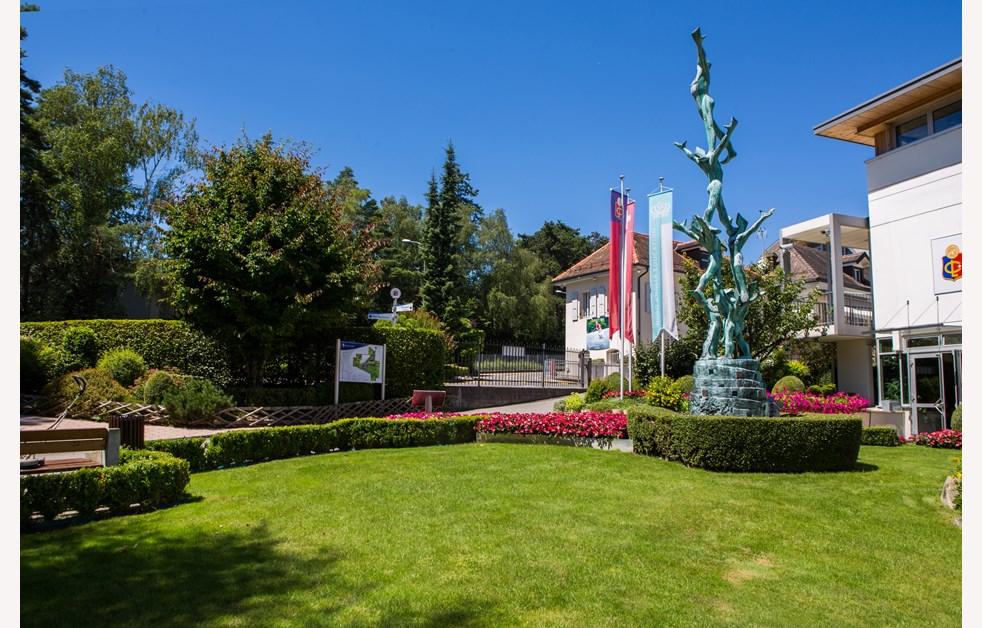
The world's most international school, with bilingual French/English IB and AP programs across two seasonal campuses on Lake Geneva and Gstaad.

Two seasonal campusesTrue bilingual educationOlympic-grade sport
Ages718
TypeBoarding
AcceptanceElite
Annual tuition
from $145,000
View school
TASIS The American School in Switzerland — boarding school campus
TT
Verified · May 2026AmericanAP
88
Montagnola, Lugano, Switzerland

TASIS The American School in Switzerland

The first American boarding school founded in Europe (1956) — a 740-pupil day+boarding campus in Lugano, American Diploma + AP + IB Diploma, 63 nationalities.

First American boarding school founded in Europe (1956)American Diploma + AP + IB Diploma at sixth form740 students from 63 nationalities
Ages319
TypeBoarding
AcceptanceSelective
Annual tuition
$25,000 – $120,000
View school
Collège du Léman — boarding school campus
CD
Verified · Apr 2026IBFrench
88
Geneva, Switzerland

Collège du Léman

A multilingual Geneva school with French, English, and bilingual tracks, plus IB, French Bac, and US High School Diploma options for 2,000+ students.

Four diploma tracksMultilingual cohortStrong sport academies
Ages218
TypeBoarding
AcceptanceSelective
Annual tuition
from $68,000
View school
American School of The Hague — boarding school campus
AS
Verified · May 2026AmericanAP
88
Wassenaar, The Hague, Netherlands

American School of The Hague

Founded 1953 in Wassenaar — the longest-running American international school in the Netherlands, ~1,200 students ages 3-18, American Diploma + AP + IB Diploma.

Founded 1953 — longest-running American school in the NetherlandsAmerican Diploma + AP + IB Diploma at Upper School~1,200 pupils from 70+ nationalities
Ages318
TypeDay
AcceptanceSelective
Annual tuition
$22,000 – $32,000
View school
Brillantmont International School — boarding school campus
BI
Verified · Apr 2026IBBritish
87
Lausanne, Switzerland

Brillantmont International School

A fifth-generation family-run boarding school overlooking Lake Geneva, with a personal academic approach and an unusually small cohort of 150 students.

Family-run since 1882Tiny class sizesThree curriculum tracks
Ages1318
TypeBoarding
AcceptanceSelective
Annual tuition
from $96,000
View school
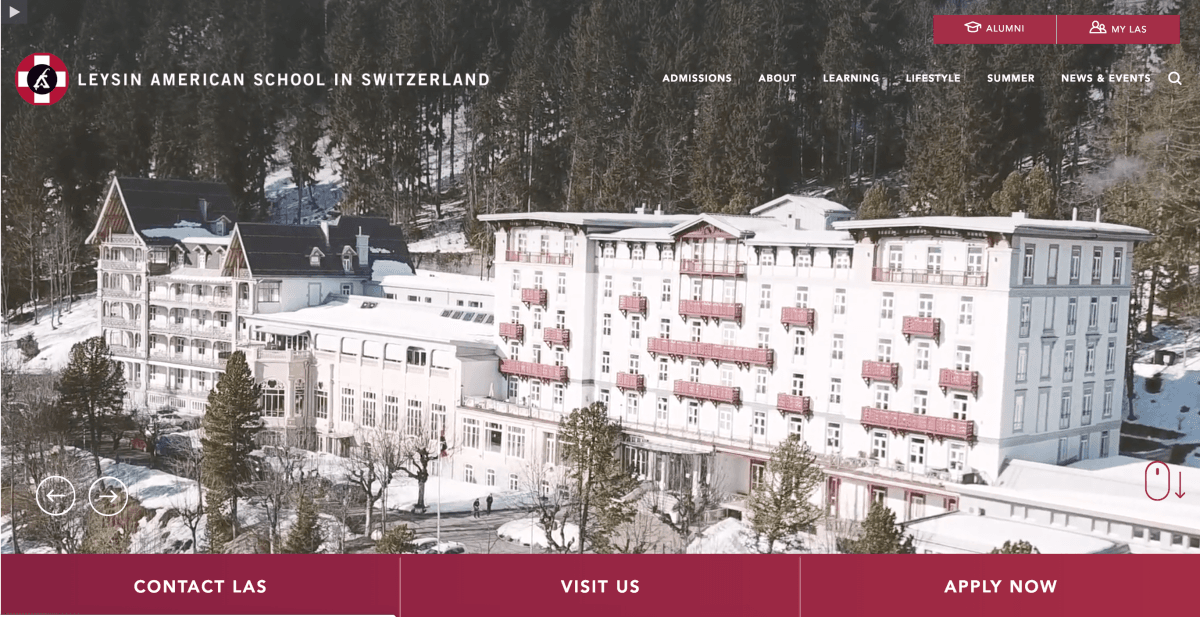
Leysin American School — boarding school campus
LA
Verified · May 2026AmericanAP
86
Leysin, Switzerland

Leysin American School

An English-language Swiss boarding school running American high-school diploma + AP alongside IB Diploma, with a mountain campus above the Rhône valley.

US Diploma + AP track + IB Diploma side by sideConservatory-level arts & design1,300 m alpine campus with daily skiing
Ages1219
TypeBoarding
AcceptanceSelective
Annual tuition
$140,000 – $165,000
View school
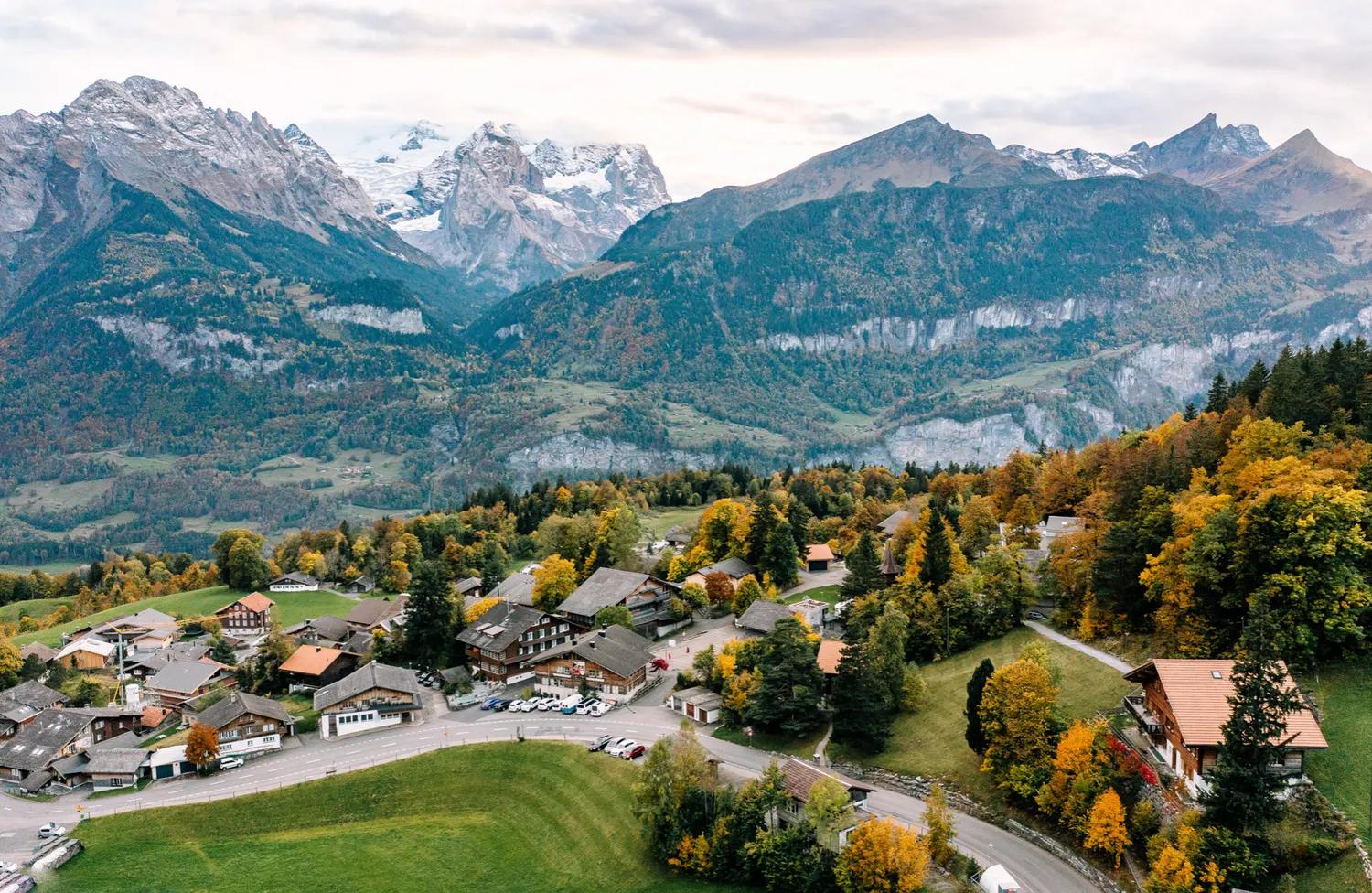
Ecole d'Humanité — boarding school campus
ED
Verified · May 2026BilingualAmerican
85
Hasliberg-Goldern, Switzerland

Ecole d'Humanité

Founded 1934 by Paul Geheeb in the Bernese Alps — a small co-ed progressive boarding school of ~110 students on a Hasliberg mountain campus, individualised non-graded curriculum.

Founded 1934 by Paul Geheeb in the Bernese Alps110 students from 25+ nationalities (intimate community)Self-paced non-graded progressive curriculum
Ages1219
TypeBoarding
AcceptanceSelective
Annual tuition
$75,000 – $90,000
View school
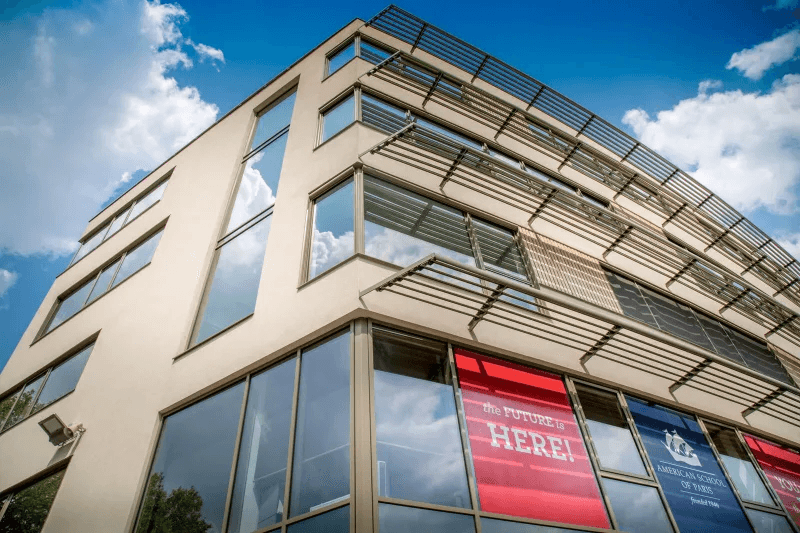
American School of Paris — boarding school campus
AS
Verified · May 2026AmericanAP
84
Saint-Cloud, Paris, France

American School of Paris

An IB + American-diploma international day school in Saint-Cloud, founded 1946 to serve the diplomatic and corporate American community in Paris.

US Diploma + AP track AND IB Diploma at sixth-formFounded 1946 — Paris's oldest American schoolSaint-Cloud campus (15 min from central Paris)
Ages318
TypeDay
AcceptanceSelective
Annual tuition
$27,000 – $45,000
View school
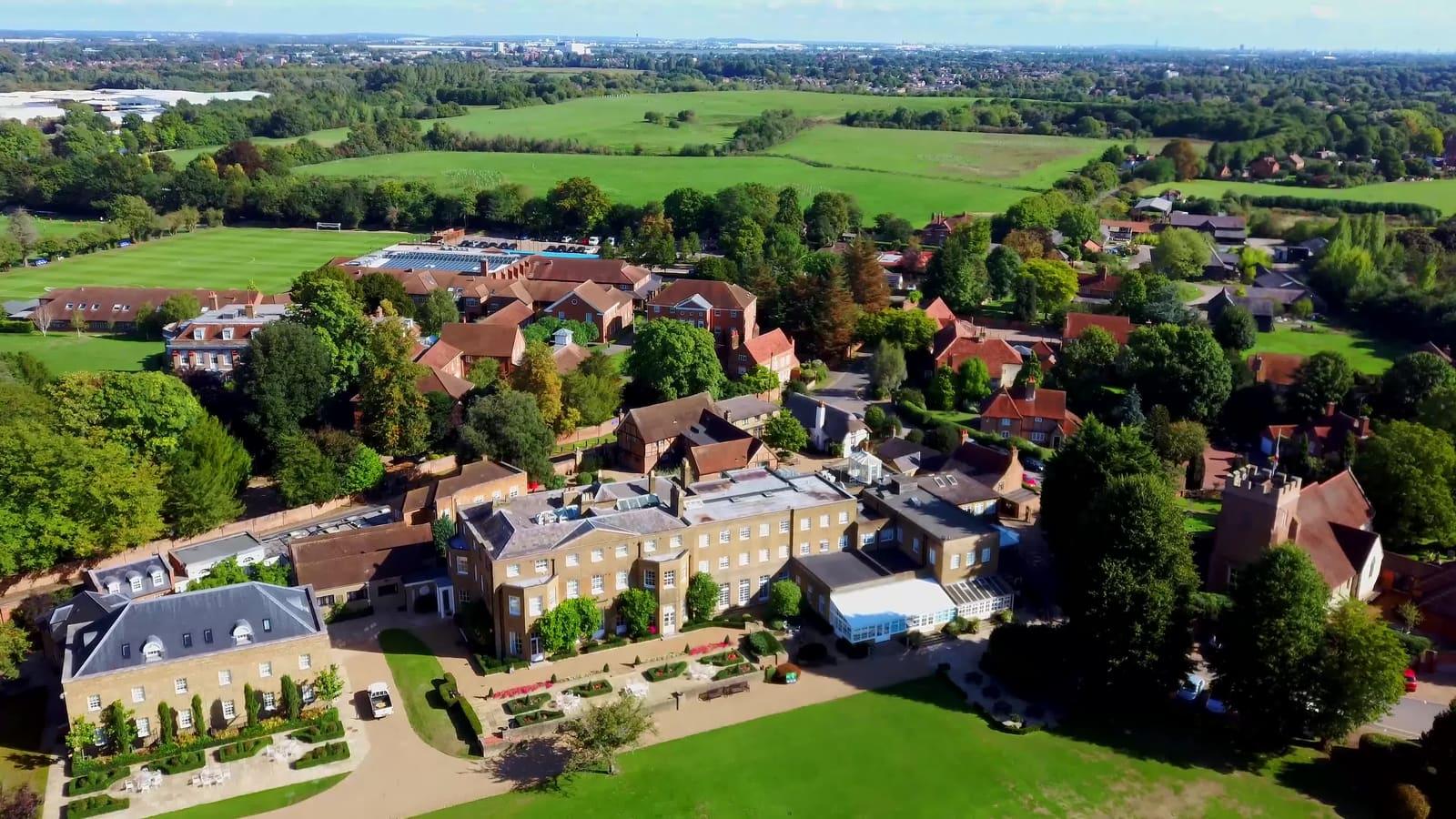
TASIS The American School in England — boarding school campus
TT
Verified · May 2026AmericanAP
84
Thorpe, Surrey, United Kingdom

TASIS The American School in England

TASIS England — IB Diploma + American Diploma with AP, on a 46-acre Surrey campus 30 min from Heathrow. About 650 students, 70+ nationalities, day + boarding from age 14.

American Diploma + AP + IB Diploma at sixth-form46-acre Surrey campusBoarding from age 14
Ages318
TypeBoarding
AcceptanceSelective
Annual tuition
$19,000 – $85,000
View school
AMADEUS International School Vienna — boarding school campus
AI
Verified · May 2026IBAmerican
80
Vienna, Austria

AMADEUS International School Vienna

A music-focused IB international school in Vienna combining IB Diploma academics with a conservatory-grade music programme — rare for an under-18 boarding school.

Conservatory-grade instrumental & vocal musicPerformances at Vienna's professional concert venuesIB Diploma + American Diploma options
Ages618
TypeBoarding
AcceptanceSelective
Annual tuition
$28,000 – $55,000may vary
View school
ACS Hillingdon International School — boarding school campus
AH
Verified · May 2026AmericanAP
80
Hillingdon, London, United Kingdom

ACS Hillingdon International School

An American-curriculum + IB international day school in West London, part of the ACS network — strong dual-pathway preparation for US and UK universities.

Both US Diploma + AP track AND IB Diploma offeredWest London location near Heathrow100+ nationalities
Ages418
TypeDay
AcceptanceSelective
Annual tuition
$10,000 – $45,000
View school
Frequently asked

FAQ — American (AP) curriculum

How many AP courses should my child take?

6-10 AP courses across 4 years of high school is competitive for top-30 US universities. 10-15 AP courses is competitive for Ivy League and equivalent. Beyond 15 there are diminishing returns and risk of burnout. The strategy that works best: 1-2 APs in Year 10, 3-4 in Year 11, 4-6 in Year 12. Choose subjects where AP-level depth is genuinely valuable (Calculus BC, Physics C, Chemistry, Biology, English Literature, US History) over filling out the count with marginal subjects.

Are AP scores accepted at UK universities?

Yes, with caveats. Oxbridge, Imperial, LSE, UCL all publish AP-equivalent admission policies. Typical requirement: 5 in 5 APs in subjects relevant to the course (e.g. Engineering: AP Calc BC + AP Physics C + AP Chem at 5). Some courses still prefer A-Levels (Medicine in particular). For most subjects at Russell Group universities, strong AP scores are accepted on equal terms with A-Levels.

What's the deal with SAT and ACT?

Standardized college admission tests for US universities. SAT and ACT are interchangeable; pick whichever your child performs better on. Score range: SAT 400-1600, ACT 1-36. Top-30 US universities cluster around SAT 1450+ / ACT 33+ for admitted students. Many US universities went test-optional after 2020 and most have stayed test-optional through 2026 — but test-submitters typically have higher admit rates. We recommend prep starting in Year 11; first sitting in spring of Year 11, retake in autumn of Year 12 if needed.

GPA — what's a good GPA and how is it calculated?

Top US universities expect 3.8+ unweighted GPA (4.0 scale) and 4.3+ weighted GPA. Calculation: each course gets a letter grade (A, A-, B+, etc.), converted to a GPA point (4.0, 3.7, 3.3, etc.), averaged across all courses. Weighted GPA gives extra points for AP/Honors courses. Class rank is reported by some schools (especially competitive day schools); not by others. A consistent transcript matters more than peak performance — universities read trajectory.

How does an American high school transcript translate to Turkish university admission?

Turkish universities accept American high school graduates via the YOS (Foreign Student Exam) pathway. The American diploma + AP scores + SAT/ACT package is well-understood by Turkish university registrars. Boğaziçi, Koç, Bilkent, METU all have published international student admission policies. The key requirement: transcript apostille + verified diploma equivalency through MEB.

Athletic recruiting through American boarding — is it real?

Genuinely. American boarding schools (especially Lawrenceville, Hotchkiss, Choate, Phillips Academy, Deerfield) have full athletic departments with NCAA recruiting support staff. Strong athletes in tennis, swimming, fencing, rowing, soccer (football), lacrosse, ice hockey, basketball, and track regularly receive Division I and Division III recruitment. The boarding school becomes the visible platform US college coaches scout from. For a Turkish student strong in tennis, swimming, or rowing — American boarding is the best US-college sports pathway.

What's the difference between American boarding and an American international school in Türkiye?

American international schools in Türkiye (TEV İnanç Türkeş, ACI, Robert Lisesi sister schools) follow American curriculum but are firmly Turkish-context — they prepare students for both Turkish (YKS) and international (US, UK) universities. American boarding in the USA gives full US-context immersion, US-style social experience, NCAA recruiting access, and direct US college counselling. Different products. The Turkish-context American schools are excellent value if you want to stay in Türkiye through high school; US boarding is the choice if you want to use the high-school years as the bridge to a US university experience.

More reading on American (AP)

Advisor AI Match